debunking the 6 biggest myths about blogs
Blogs, journals, think pieces….however you want to call it, blogs have long been considered the number one way to finagle your way onto the first page of Google’s search results. But with AI changing the game on a near daily basis and consumer outlook squeezed to ‘not great’, is a blog even worth the effort? Well, yes. But here’s the catch. How you generate, write, and optimize that blog determines just how successful your luxury brand’s blog can be. Intrigued? Us too. We’re making the case for why luxury brands shouldn’t turn their noses up at blogs and how they can create blog content that not only converts users into customers but converts customers into lifetime clients.
the evolution of the blog
If we’re going to talk about why blogs are still important today we need to first understand why (and how) they became the undisputed kings of content in the past. Because, somewhat surprisingly, a lot of what made them work in the first place remains in place today. This topic could be its own blog post, to be honest, so we’ll try to keep it as short and succint as possible.
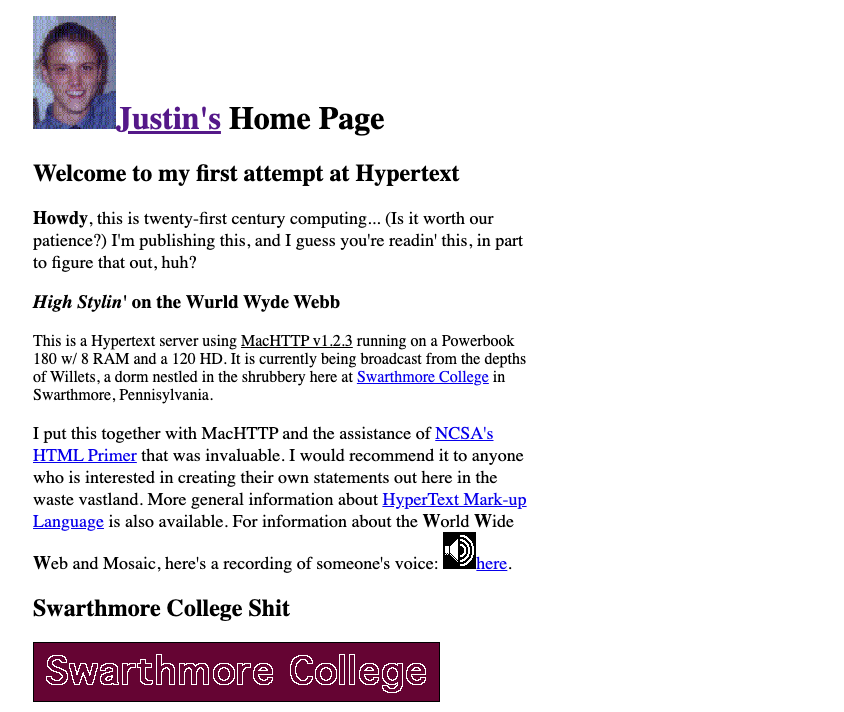
I don’t know about you, but there’s something enduringly sweet with the first blog ever posted to begin with the word, ‘Howdy’
The STart of the personal blog
“ Howdy, this is twenty-first century computing... (Is it worth our patience?) I'm publishing this, and I guess you're readin' this, in part to figure that out, huh?”. So goes the first sentences of the first blog post ever published on the internet. And like much tech advances, it came from a college undergrad (Justin Hall) all the way back in 1994. Considered by many as the father of modern blogging, Justin would later work as a journalist, CEO, and co-founder of a recreational cannabis company. Nice.
Following Justin’s path, more and more people began turning to the internet to web-log their thoughts and opinions. And blogging, the word itself came into the this world by accident. Jorn Barger coined "weblog" in 1997; in 1999 Peter Merholz split it in his sidebar as a joke — we blog — and the joke won. That same year Blogger, LiveJournal, and Xanga launched. You no longer needed HTML to publish — just a username and an opinion.
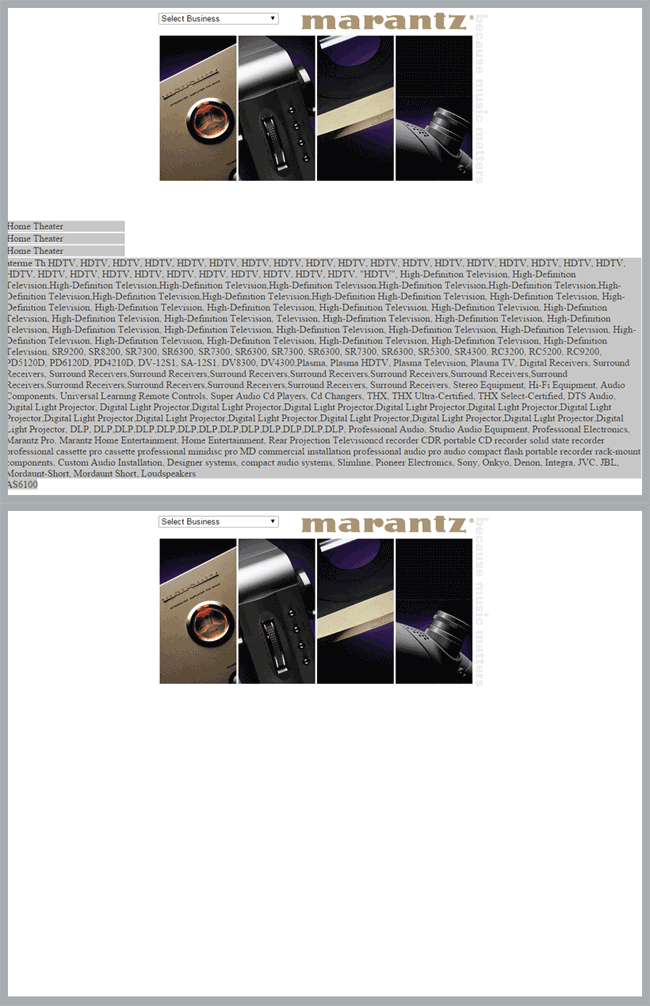
A common black hat SEO tactic was keyword stuffing invisible text into the body of webpages. Yeah, it was sort of genius, but also really annoying if you were trying to get to the bottom of any (very long) keyword stuffed page.
Capitalism enters the blogosphere
By 2003 blogging was taking off. Google launched Ad Sense, an advertising service that displayed ads relevant to what was being blogged about, allowing, for the first time, bloggers to be paid for their work. What’s more, 2003 was also essentially the Wild-Wild-West of on-page SEO. That is, ranking was mostly a matter of repetition. Every new post meant another page to stuff with keywords and another slot for exact-match links. So brands bolted blogs onto their sites and churned — hidden text, spun articles, 500 words about nothing — until Google decided it needed to do something about it…
One big panda problem
In February 2011, Google shipped an algorithm update named Panda, and it hit roughly 12% of US search results overnight. Panda's whole job was to identify thin content — pages that existed to rank rather than to be read — and bury it. Content farms that had built empires on cheap, keyword-padded articles lost most of their traffic in a week. Some never recovered. The message was blunt: the blog was no longer a loophole. If you wanted the traffic, you had to earn it with something a person would actually want to read.
So Google spent the next decade slowly, relentlessly raising the bar. Did blogs stop working? Not even close — they're still the most dependable way to pull in traffic and prove your brand actually knows its stuff, which, let's be honest, is a harder thing to prove than most brands want to admit. But the terms changed. Google spelled them out as E-E-A-T: Experience, Expertise, Authoritativeness, Trustworthiness.
Translation? Who wrote this. Have they actually done the thing. Would a real person trust this site enough to spend money on it. By 2022, a blog post couldn't just say the right words in the right order anymore. It had to come from someone with a reason to be saying them. Keep that last part in mind — it's about to matter a lot more than anyone expected.
AI Enters the Picture
And then the floor dropped out. ChatGPT launched in late 2022, and within a year anyone could produce a technically competent 1,500-word blog post in about ninety seconds. Naturally, everyone did. Google's response was to spend 2024 and 2025 rolling out helpful content updates that gutted sites publishing at volume with nothing behind it — and, at the same time, putting AI Overviews at the top of the results page, which quietly started answering the easy questions before anyone clicked anything. So the generic explainer post is finished. If a machine can answer it in a summary box, your version of it isn't earning a visit. And thus, many brands find themselves wondering, ‘Is the effort behind producing a blog actually worth it?’
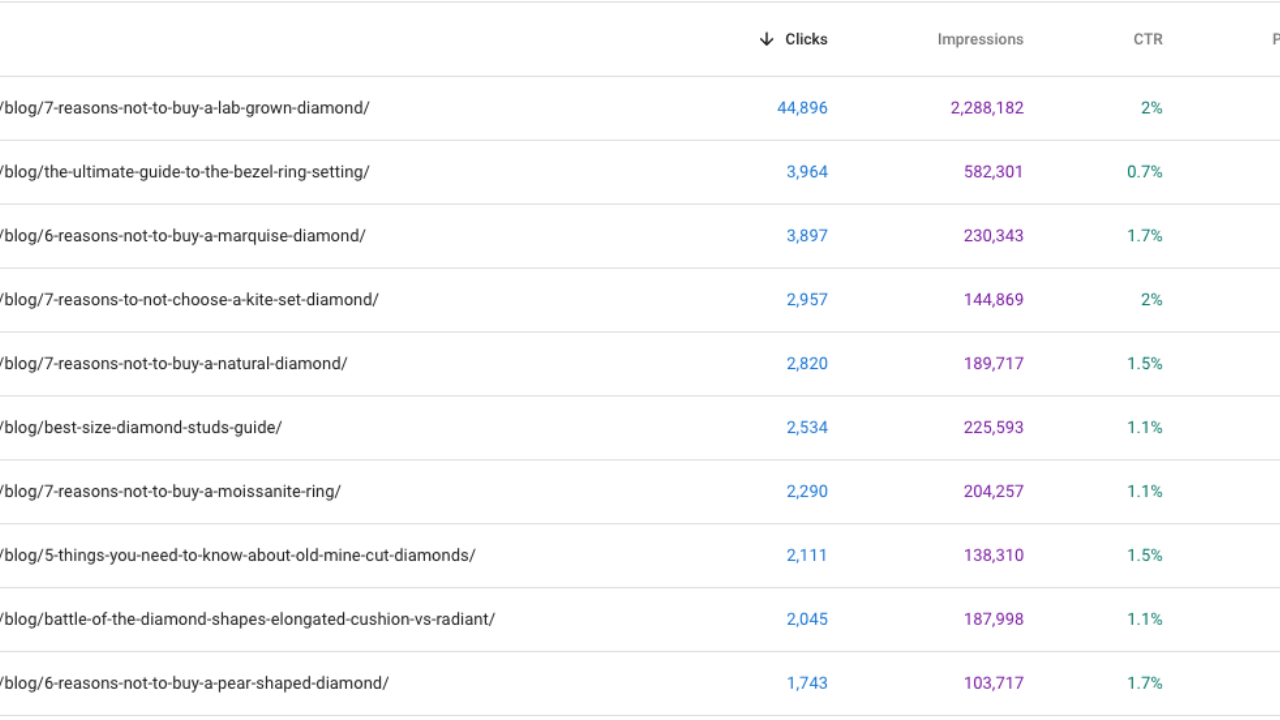
This brand really struck a golden goose with their top blog-44,896 clicks in three months is crazy work.
Myth #1: Blogs No Longer Generate Clicks
People are inherently lazy, right? Why would anyone choose to continue to scroll through Google results when there’s a neat-little AI Overview displayed top of your results screen? Look, we’re not denying that blogs have taken a traffic hit. Many people are choosing to settle with an AI Overview, effectively turning top ranking blog posts into second search result pages, but that doesn’t mean that blogs aren’t still incredibly effective at generating traffic. In fact, for many brands, blogs remain the primary generator of traffic outside of direct visits.
But why is this? Because the questions worth ranking for aren't the ones an Overview can close out. "What is a moissanite" gets summarized and forgotten. "Is moissanite worth it if I'm spending four grand" does not — that person is nervous, they're about to make a decision, and a two-sentence summary is nowhere near enough reassurance. They click. They read three sources. They come back to the one that sounded like it was written by someone who'd actually held the thing.
That's the split nobody saw coming. AI Overviews vaporized informational traffic and left the commercial traffic almost entirely intact — which happens to be the traffic that was ever going to buy anything. If your blog was built on volume, on being the internet's encyclopedia entry for a term you don't own, yes, that's over. If your blog was built to meet someone mid-decision, you didn't lose the click. You lost the tire-kickers.
And there's a second thing happening underneath. Those AI Overviews are assembled from somewhere. So are the answers your customers get when they skip Google entirely and ask ChatGPT which jeweler to trust. Getting cited in those answers requires the same thing ranking does — published, specific, credible content with your name on it. The blog stopped being just a traffic channel. It became the raw material the machines are quoting.

Le Labo is doing something really interesting to publish both culture and content. They produce their own newspaper, Le Journal. Maintaining it in physical form atstores for customers to browse while shopping and also making it available in its same format online. The best of both worlds - totally elevated.
Myth #2: Blogs cheapen the image of luxury brands
Look, again we’re not going to argue with facts here. It’s true that some heritage houses like Chanel don’t contribute to any online blog-esque formats. Instead, these brands take pen to paper. Let’s talk about Chanel. They produce a 250 page Arts and Culture magazine that is built around its multiple collaborations with both artists and cultural institutions (and that one can purchase on the secondary market for the low-low-price of just $50-$250). And we get it! It’s incredibly effective at producing both exclusivity and intrigue! But believe it or not, Chanel is in the minority here. Cartier employs a ‘News’ section that contains not only company news but behind the scenes look at their products and creative process, you know, like a blog. Rolls Royce also employs a blog but quite geniusely places it behind a wall of exclusivity. To access it, you must already be a Rolls Royce owner.
Here’s the thing too, and some tough love you may not want to hear, these hyper well-known luxury brands are working mostly at publishing culture, not content. If you run a lesser known luxury brand that is finding your customers primarily online, you need to publish both culture and content. Nobody is Googling "is Chanel worth it" at eleven at night with a credit card open in another tab. That's the luxury of a hundred years of brand equity — the discovery is already done, so the publishing can be pure atmosphere.
This is why online-first houses behave completely differently. Blue Nile runs a blog called Cut & Polish covering diamond buying, ring guides, and jewelry care, and it's still publishing multiple times a week. Brilliant Earth, James Allen, and Mejuri all do their own version of it. These aren't unserious brands. They just have unserious competition for attention, and they know a $4,000 decision made alone at midnight requires something more substantial than a mood board.
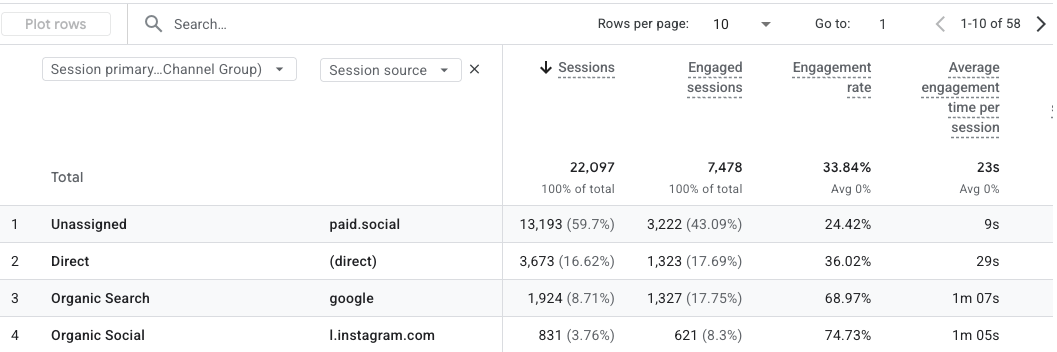
Social media may get the flash but number don’t lie, organic search - much of it driven by the blog, is doing the heavy lifting here when it comes to quantity and engagement rate.
Myth #3: Social media does the same job, better
You've heard this one in a meeting. Our customer lives on Instagram. Our engagement is strong. Why would we pour hours into a blog nobody's asking for when a single carousel outperforms it? And honestly, the logic tracks — social is visual, luxury is visual, and it's where the audience already is.
Here's what's wrong with it. You don't own that audience. You rent it, and the landlord changes the terms without telling you. Every brand that built a following in 2019 watched their organic reach quietly throttled, then watched the algorithm pivot to video, then away from video, then decide your carousels were now suppressed for reasons no one will ever explain to you. Ask anyone who's had an account suspended in error what the appeals process is like. There isn't one.But the deeper problem is that social and blogs aren't competing — they're doing different jobs. Instagram is where someone discovers the ring. Google is where they decide whether to buy it. If your customer sees the piece on Sunday and searches your brand on Wednesday, the question isn't whether they'll find something. It's whether they'll find you, or a Reddit thread, or a competitor's comparison post.
And a post lasts. Your reel had a great 48 hours. That article will still be working in three years — and, increasingly, being quoted by an AI that can't cite an Instagram story.
Myth #4: AI Can Write It
Ok, we’re not arguing that AI can’t write. AI can write well and is actually getting better and better and better. But when you’re a luxury brand, you're not selling on efficiency. You're selling on the fact that nobody else can do this the way you do it — and then handing your voice to a tool that has read every competitor you have and averaged them. And that’s…fine? Especially if you want to be an average brand.
But that’s not you, is it?
This isn’t us slandering AI because we think it’s here to take our jobs, in fact, the most effective way to write blogs is with AI. And it’s the with that’s important there. Use AI to help you generate ideas for future blog posts, perform spelling and grammar checks, help you out of a brain-fart or fog hole. But don’t use it to generate an entire blog post for your luxury brand. Because in truth, it’s good, but it’s not that good. Consumers can spot AI at an alarming rate, and when you’re selling premium-priced products, skimping on the words is the fastest way to make someone wonder what else you skimped on. Nobody consciously thinks "that em-dash felt suspicious, I won't buy the ring." They just feel a small flatness, a sense that no one's actually home, and they close the tab. You'll never see it in your analytics. You'll just see a bounce rate you can't explain.
And Google's watching the same thing from the other direction. The last two years of updates have systematically buried sites publishing at volume with nothing behind them, and E-E-A-T's first E — Experience — exists precisely to reward the stuff a model has never done. You know, like work a day in the luxury industry.

Ok, it’s kind of fuzzy (forgive us), but take a look at what three years of consistent blog posting has done for one luxury e-commerce brand…er, sorry - that’s $117,689.63 in sales. Which is nothing to bat an eye at!
MYTH #5: Blogs Don’t Convert, They Just attract Window Shoppers
We hear this one a lot. And we get it. We do. Because while it’s absolutely true that blog posts attract a lot of window shoppers, they also just happen to attract customers at every stage of the buying phase. And that converts.
Here's the thing about the objection: it's usually an attribution problem wearing a conversion problem's clothes.Somebody reads your guide to colored gemstone engagement rings in March. They don't buy. They don't even sign up for anything. Then in July they type your brand name into Google and buy a ring. Your dashboard files that as direct or branded search, and the blog post — the thing that got you into consideration in the first place — gets zero credit. Kill the blog on that evidence and you'll watch branded search quietly dry up two quarters later, wondering what happened.
So how do you properly attribute blog post sales? Lucky for you, we actually did this with a past client. The key here is to create specific UTM parameters that allow you to track your audiences events and actions. In action, this looks like tagging the internal links pointing into and out of your blog posts, so you can see exactly which article a purchase came from. We did this. It works, and it produced a real number. And if you've never measured your blog at all, that alone will change the conversation.
But here’s the thing: UTMs on internal links start a brand new session in GA4. That means you only ever catch the people who read and bought in one sitting. Which, as we've established, is not how anyone buys a $4,000 ring. Every single one of the March-readers-who-buy-in-July, the exact people this whole section is about, are invisible to that report. You've measured the fast conversions and missed the slow ones.
So run the second half. In GA4, build a content group covering all your blog URLs — every post, one bucket. Fire custom events on the CTAs inside your posts so you can see what people actually do after reading. Then build the report that ends the argument: two audience segments, same date range, side by side. Users who viewed at least one blog post before purchasing. Users who didn't. Now you're comparing conversion rate and average order value between readers and non-readers, across the entire buying window — not just the people who happened to close it out in a single visit.
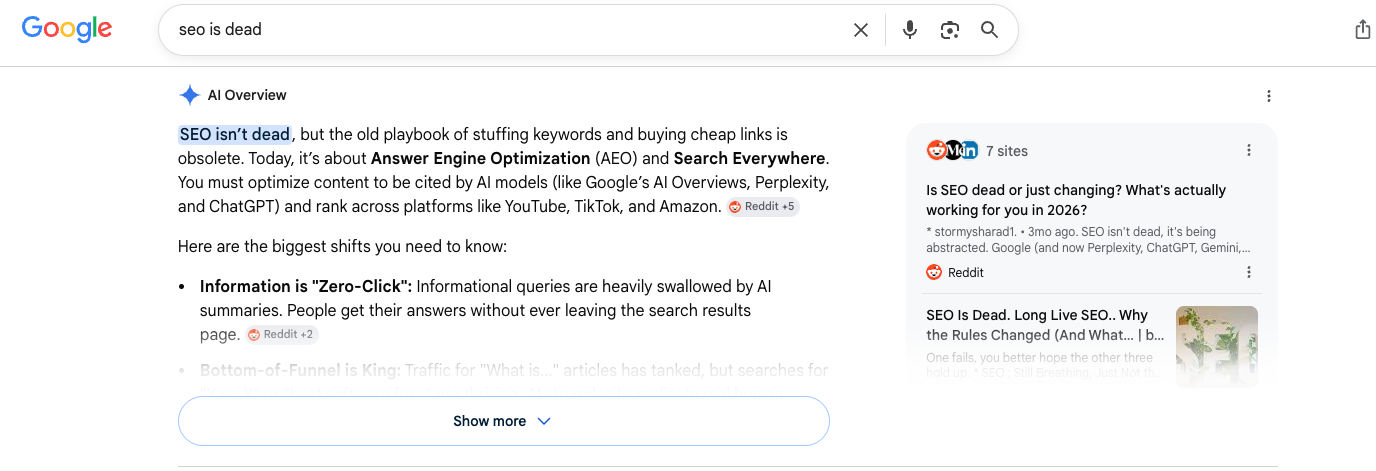
See, SEO isn’t dead, the robots told us so.
Myth #6: SEO is Dead and blogging is pointless
This is the loudest one right now, and it comes from a real place. Zero-click searches keep climbing. AI Overviews are eating the top of the page. Somebody on LinkedIn declares SEO dead roughly every eleven days. If your read is that the whole channel has been quietly repossessed, we understand how you got there.
But look at what actually happened. Search didn't die. It multiplied.Your customer used to have one place to ask a question. Now they have Google, ChatGPT, Perplexity, TikTok, Reddit — and increasingly they ask two or three of them before they ever land on your site. Which sounds like a nightmare until you notice that every one of those systems has the same requirement: it needs something of yours to pull from. An AI Overview is assembled from published sources. So is the answer when someone asks ChatGPT which jeweler to trust for a bespoke setting. Nothing published means nothing to cite. You're not in the running.
And that’s what really matters. Your blog stopped being just a traffic channel and became the raw material the machines are quoting. The brands that get named in those answers aren't the ones with the most content. They're the ones with the most specific, credible, attributable content — which is a very old-fashioned way of saying the same thing E-E-A-T has been saying since 2022.
These blog myths are busted
Call us the mythbusters because these 6 blog myths are busted. And look, we know that when you run a business the last thing you want to do is spend hours and hours writing, editing, and technically adapting your blog post for success. That’s where we come in. Or, rather, me. Molly. I am a luxury marketer that specializes in long-form content, copywriting, and brand strategy. I’ve most likely worked for your favorite brands and yes, I would also love to work with you! Ready to get started? Check out my blog writing portfolio or drop me a line at the beep or on LinkedIn. Trust me, you won’t regret it. Beeeeep.